Key Takeaways from NDASA and the Future of Screening Tech
The energy at the National Drug & Alcohol Screening Association (NDASA) Annual Conference in Anaheim, CA, was nothing short of electric. Walking the floor, one thing became abundantly clear: the screening and software provider industry is standing on the precipice of a major technological wave.
From automated workflows to advanced data analytics, the sheer volume of “next-gen” tech on display was inspiring. As a technology-forward software provider, i3screen welcomes this evolution with open arms and genuine excitement.
However, amidst the flash of rapid deployments and hyper-fast solutions, a vital conversation is emerging about balance. While many new tech entries are leaning heavily if not solely into AI to promise lightning-fast results, we believe it is our responsibility to approach this wave with equal parts enthusiasm and due diligence.
The Allure of “Fast and Quick”
In our industry, speed is a massive asset. Turnaround times matter to employers, clinics, and TPA networks alike. It is incredibly tempting to hand the keys entirely over to artificial intelligence to build fully automated, untouched systems.
AI is an extraordinary tool. It can parse vast amounts of data, flag anomalies, and streamline administrative bottlenecks. But when tech moves too fast without structural guardrails, the hidden costs start to pile up. In drug and alcohol screening, where compliance, legal defensibility, and people’s livelihoods are on the line, “quicker” can easily cost us all in the end.
API Speed Meets Human Substance: A Real-World Example
To see what we mean by balancing tech and human oversight, look no further than how data moves across integrations.
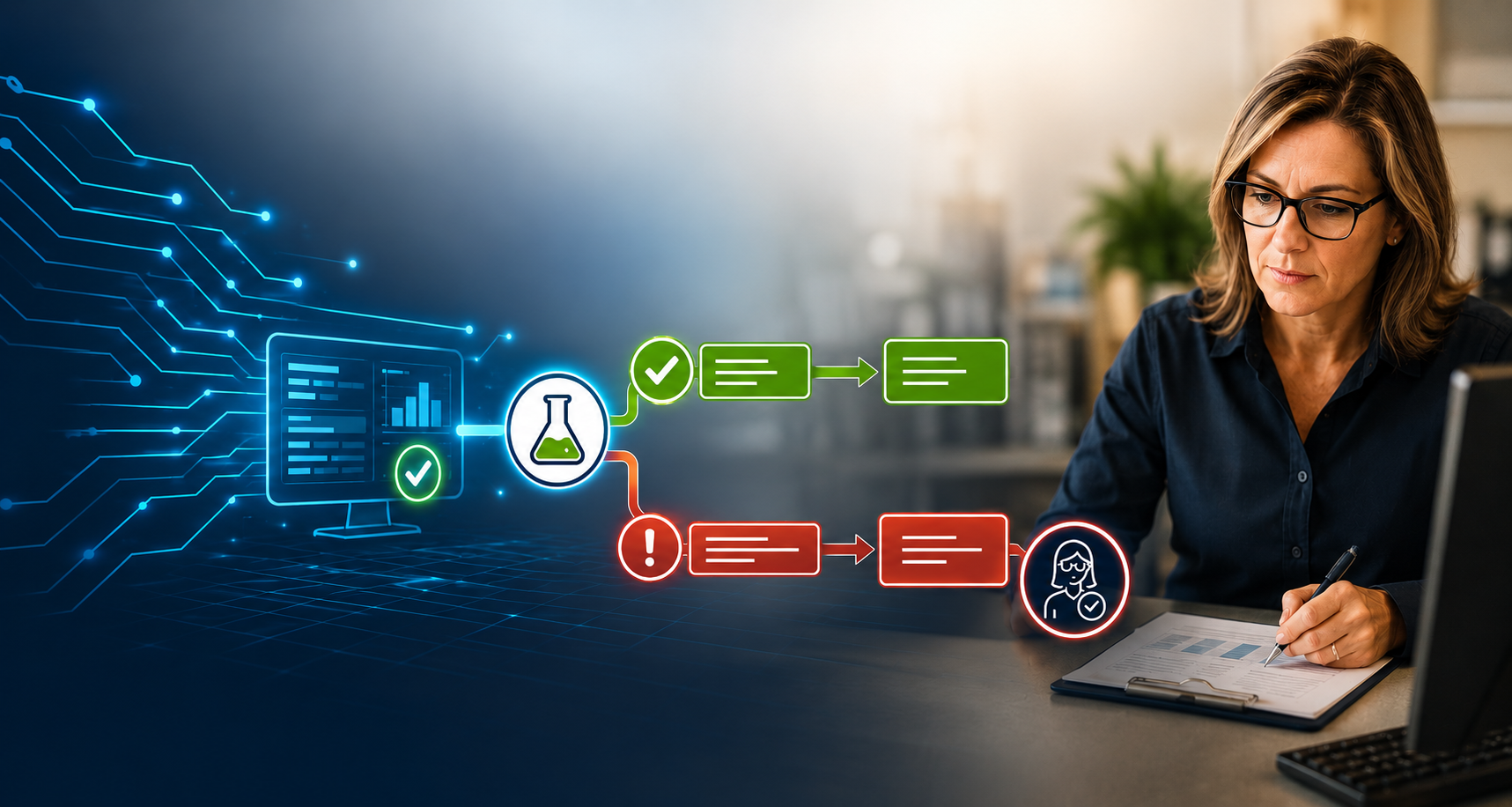
Through robust API requirements, our systems can ingest and interpret negative screening results almost instantaneously. It’s clean, it’s fast, and it keeps business moving. But what happens when a result comes back non-negative?
An entirely automated system might just push that data point through a pipeline without a second thought. But at i3screen, we believe that is exactly where the technology should pause, and human expertise must step in.
- The Human Connection: In the event of a non-negative result, an employee deserves to speak with a live person.
- Preserving the Fundamentals: This industry was built on a foundation of checks and balances. Technology might modify our daily roles and optimize our workflows, but those core fundamentals cannot be programmed away.
Our Commitment: We owe it to our Partners and their employees to ensure that behind every life-altering data point, there is an experienced human being verifying the facts.
The i3screen Philosophy: Eyes on the Process
We believe the true sweet spot isn’t found by diving headfirst into the deep end of total automation. Instead, it lies in this intentional, hybrid approach using bleeding-edge technology to empower, rather than replace, human expertise.
Beyond donor reviews, there is an irreplaceable need for a live, highly trained set of eyes to oversee our most critical touchpoints:
The Source Code: Software should not just be built fast; it should be built thoughtfully, securely, and with a mature, enterprise-ready approach. AI assistance can accelerate innovation, but experienced developers and rigorous QA oversight ensure compliance, reliability, and trust are built into the foundation from day one.
Moving Forward, Responsibly
At i3screen, our commitment to being a technology leader remains unchanged. We are actively developing, innovating, and integrating tools that make the screening lifecycle smarter, smoother, and more efficient.
But our promise to our clients is that we will never sacrifice accuracy for emerging technology. We will continue to champion a tech-forward approach that respects the absolute necessity of human experience, deep industry knowledge, and meticulous due diligence.
Thank you to everyone who connected with us in Anaheim! Let’s keep pushing the boundaries of what’s possible in workplace safety, thoughtfully, securely, and together.